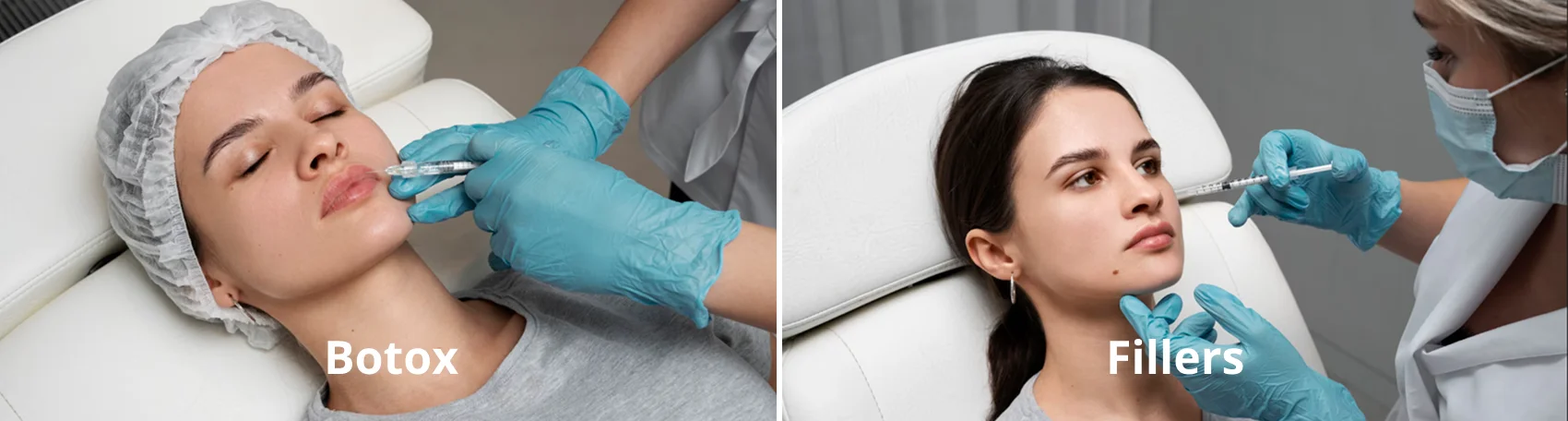
Botox and dermal fillers are both injectable cosmetic treatments, but they work differently. Botox relaxes facial muscles to soften dynamic wrinkles caused by expressions, while dermal fillers restore lost volume, enhance facial contours, and smooth static wrinkles. The right treatment depends on your cosmetic goals and the areas being treated.
If you are interested in non-surgical aesthetic treatments, you’ve probably encountered the terms Botox and dermal fillers. Although they have different uses and target different aging concerns. Understanding the differences can help you determine the best option to address your aesthetic concerns.
Similarities Between Botox Injections And Dermal Fillers
With non-surgical options available, including botox treatment and dermal fillers, keeping a youthful and glowing appearance is easier than ever. Both procedures are relatively non-invasive, have short recovery times, and can help refresh your appearance in a completely natural way. Botox smooths wrinkles, and facial volumizers restore lost or diminished volume and fullness.
Many find that a combination of Botulinum toxin injections and dermal fillers treatment can effectively rejuvenate a person’s appearance in a natural way. The end result is subtle, and most people find that they require a touch-up treatment eventually to maintain their fresh appearance.
Why Do People Confuse Botox and Fillers?
Botox and dermal fillers are both injectable treatments commonly used to reduce visible signs of aging. Because they can improve wrinkles and create a more refreshed appearance without surgery, many people assume they are interchangeable.
In reality, they target different concerns. Botox helps reduce expression lines that form when facial muscles contract, whereas fillers restore volume in areas where the skin has become thinner or less supported over time. Many patients benefit from using both treatments as part of a personalized facial rejuvenation plan.
Difference Between Botox and Fillers
Although both Botox and dermal fillers are commonly used types of cosmetic procedures, they have different uses and mechanisms of action. Understanding the differences between the two will help determine the best treatment for you.
| Feature | Botox | Dermal Fillers |
| Primary Purpose | Relaxes facial muscles | Restores facial volume |
| Best For | Dynamic wrinkles | Static wrinkles and volume loss |
| Common Areas | Forehead, crow’s feet, frown lines | Lips, cheeks, jawline, smile lines |
| How It Works | Temporarily relaxes targeted muscles | Adds volume beneath the skin |
| Results Appear | Within several days | Often immediately, with final results after swelling settles |
| Typical Longevity | Around 3–4 months | Often 6–18 months, depending on the product and treatment area |
| Downtime | Minimal | Minimal |
Key Takeaway
Botox treats wrinkles caused by repeated facial movements by temporarily relaxing targeted muscles, while dermal fillers address wrinkles and facial changes caused by volume loss by restoring fullness and enhancing facial contours.
Botox
Botox is an injectable treatment that temporarily relaxes selected facial muscles responsible for repetitive expressions. Over time, these repeated muscle movements contribute to the development of dynamic wrinkles, such as forehead lines and crow’s feet.
By reducing muscle activity in carefully selected areas, Botox allows the overlying skin to appear smoother while helping prevent existing expression lines from becoming more noticeable.
Botox is commonly used to treat:
- Forehead lines
- Frown lines (the “11” lines between the eyebrows)
- Crow’s feet
- Bunny lines on the nose
- Chin dimpling
- Neck bands
Treatment sessions are typically brief, and many people return to their normal activities shortly afterward.
How Does Botox Work?
Every time you smile, frown, squint, or raise your eyebrows, your facial muscles contract. Over the years, these repeated movements leave visible lines in the skin.
Botox works by temporarily reducing the activity of specific muscles responsible for these repetitive movements. When those muscles relax, the skin above them has an opportunity to appear smoother, reducing the appearance of dynamic wrinkles.
Results develop gradually over several days, with the full effect generally becoming noticeable within about two weeks.
Dermal Fillers
Unlike Botox, dermal fillers do not affect muscle movement.
Dermal fillers are injectable gel-like products designed to restore volume beneath the skin, soften deeper folds, and enhance facial contours. They are commonly used to address age-related volume loss and improve facial balance.
As we age, the skin naturally loses collagen, elastin, and fat, which can lead to hollow cheeks, thinner lips, and deeper facial folds. Fillers help restore support in these areas, creating a refreshed and natural-looking appearance.
Common treatment areas include:
- Cheeks
- Lips
- Nasolabial folds (smile lines)
- Marionette lines
- Chin
- Jawline
- Temples
- Under-eye hollows (in appropriate candidates)
How Do Dermal Fillers Work?
Dermal fillers are carefully injected beneath the skin to restore volume in targeted areas. Many fillers are formulated with hyaluronic acid, a substance that naturally occurs in the body and helps retain moisture within the skin.
By replacing lost volume and improving facial contours, fillers can:
- Smooth deeper facial folds
- Restore youthful cheek volume
- Define the jawline
- Enhance lip shape and fullness
- Improve facial symmetry
- Create a more refreshed appearance
Depending on the type of filler and treatment area, improvements are often visible immediately, although mild swelling may temporarily affect the final appearance.
Botox vs. Fillers: The Biggest Differences
Although both treatments are minimally invasive and designed to reduce visible signs of aging, their purpose is very different.
Botox is ideal for:
- Forehead lines
- Crow’s feet
- Frown lines
- Wrinkles caused by facial expressions
- Preventing expression lines from becoming more pronounced
Dermal fillers are ideal for:
- Volume loss
- Hollow cheeks
- Thin lips
- Smile lines
- Marionette lines
- Jawline contouring
- Chin enhancement
Botox relaxes muscles.
Fillers restore volume.
Which Treatment Is Better for Different Concerns?
Not every wrinkle develops for the same reason, which is why choosing the right treatment matters.
| Concern | Recommended Treatment |
| Forehead lines | Botox |
| Crow’s feet | Botox |
| Frown lines | Botox |
| Smile lines | Dermal Fillers |
| Thin lips | Dermal Fillers |
| Hollow cheeks | Dermal Fillers |
| Jawline definition | Dermal Fillers |
| Chin enhancement | Dermal Fillers |
| Neck bands | Botox |
| Volume loss | Dermal Fillers |
Can Botox and Fillers Be Used Together?
Numerous people opt for the combination of Botox and fillers to get a more facial rejuvenation. It can ease expression lines, and increase volume to restore a youthful contour and enhance specific facial features. When Botulinum toxin injections and collagen stimulators are used in combination, patients achieve an enhanced appearance with ease.
Which Wrinkle Treatment is Right for You?
Whether you choose Botox or fillers for treatment depends on your individual concerns and goals.
- If you are aiming for less forehead lines, crow’s feet or frown lines, these facial muscle relaxers may be the best choice.
- If you are interested in regaining volume, smoothing out deep folds, or enhancing your lips, lip fillers or other types of plumping injectables would likely be better options.
Seeing a licensed provider at a reputable Medspa in Frisco will provide a safe and individualized care plan.
Conclusion
Botox and fillers are effective wrinkle treatment for minimizing the signs of aging, but they work differently. The Botulinum toxin temporarily relaxes muscles to smooth wrinkles while plumping injectables restore volume and structure. Patients seeking high-quality derma fillers in Frisco can expect a professional guide to assist in attaining natural-looking effective results that will last.
Knowing the difference between botox injections and fillers is important for making an informed choice, to achieve an outcome that is sought, and to get the procedure done according to your also to prevent invasiveness to the process.